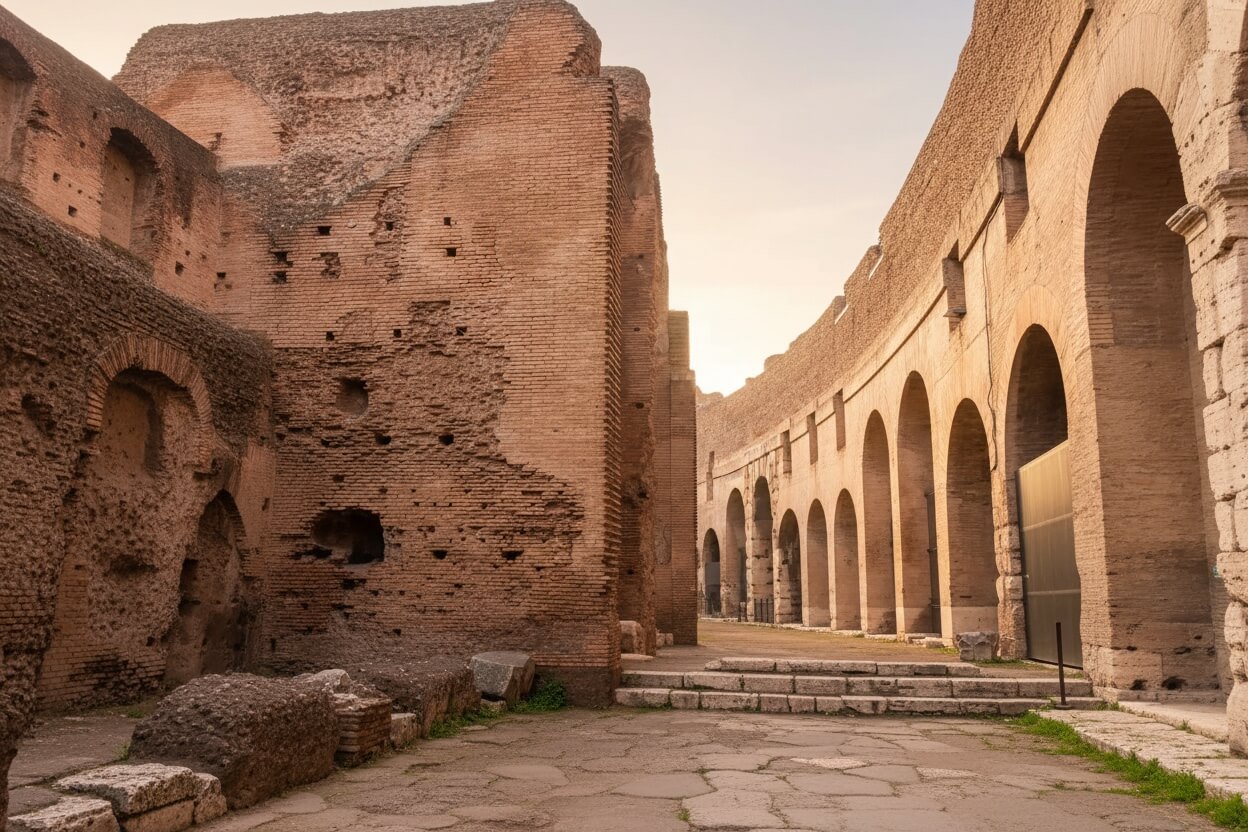
Colosseum in Rome
The largest amphitheatre ever built, standing at the heart of Rome for nearly two thousand years. 50,000 spectators, four storeys of travertine arches and a history that still takes your breath away.
BUY TICKETS
The largest amphitheatre ever built, standing at the heart of Rome for nearly two thousand years. 50,000 spectators, four storeys of travertine arches and a history that still takes your breath away.
BUY TICKETSThe Colosseum in Rome, officially the Flavian Amphitheatre (Lat. Amphitheatrum Flavium), is the most extraordinary surviving structure of the Roman Empire and one of the world's most recognisable landmarks. Built between AD 70 and 80 under the emperors Vespasian, Titus and Domitian, it served four centuries as the stage for gladiatorial combat, wild animal hunts and elaborate public spectacles. Inscribed on the UNESCO World Heritage List in 1980 and voted one of the New Seven Wonders of the World in 2007, it now draws over 7 million visitors a year.
The Roman Colosseum is routinely the most visited paid attraction in Italy. A visit inside is an experience that photographs simply cannot convey: the sheer scale of the auditorium, the direct view down to the arena floor and the engineering genius of the hypogeum beneath it all leave an impression that stays with you long after you leave.
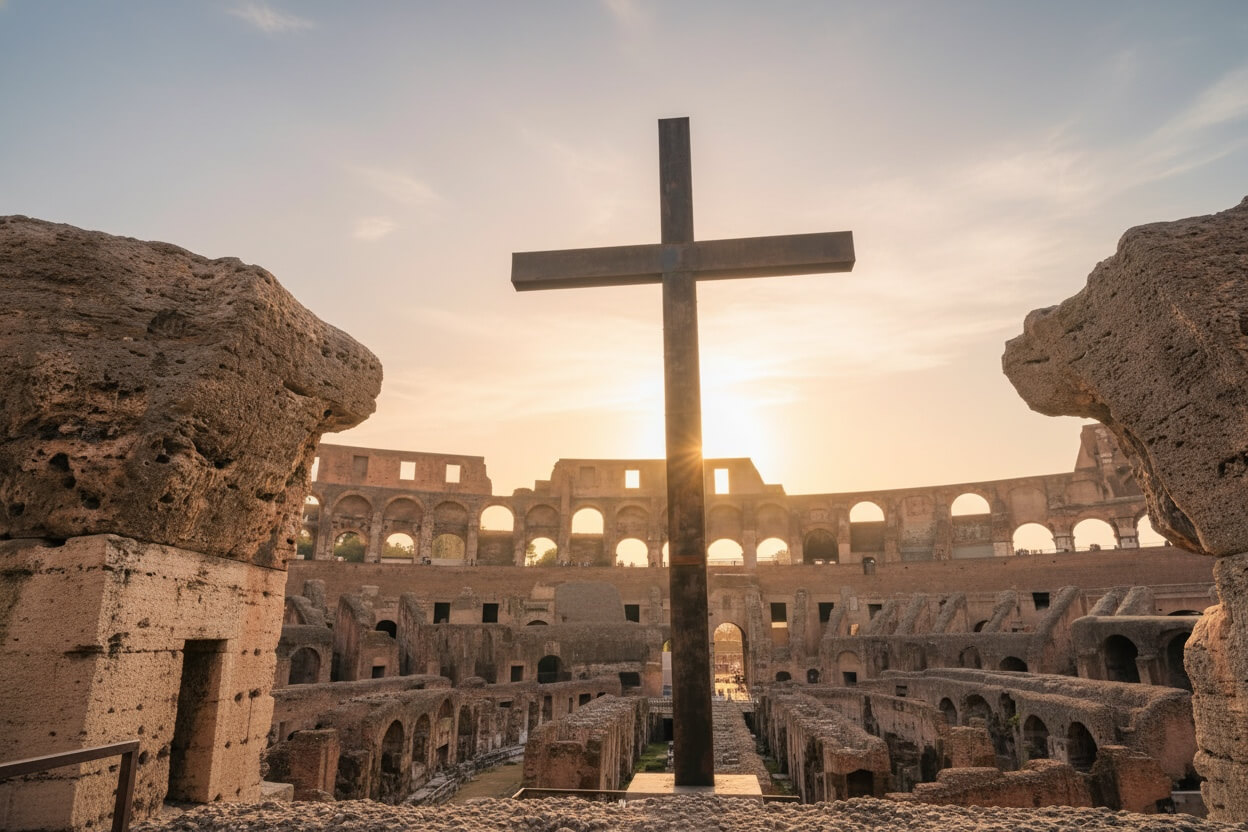
The decision to build the Colosseum was as much a political statement as an architectural one. Emperor Vespasian, who seized power in AD 69 after a year of civil war, chose to erect the world's largest amphitheatre on the precise spot where Nero had commandeered Rome's centre for his own private pleasure gardens and artificial lake. The message was clear: the heart of Rome was being returned to its people. Construction was funded largely by the spoils taken after the destruction of the Temple of Jerusalem in AD 70.
Vespasian's son, Emperor Titus, opened the amphitheatre in AD 80 with a hundred days of games, during which thousands of gladiators and almost nine thousand wild animals from Africa and the Near East were killed in the arena. His brother Domitian completed the structure by adding the hypogeum — the underground service level — and the fourth tier of seating. At its peak, in the first and second centuries AD, the Colosseum hosted tens of thousands of spectators every week throughout the games season.
After the fall of the Western Roman Empire in the fifth century, the Colosseum gradually fell out of use as an entertainment venue. Throughout the Middle Ages it served as a fortress for noble families, then as an informal stone quarry from which pre-cut travertine was removed for use in churches, palaces and other Roman buildings. Estimates suggest that up to two-thirds of the original fabric disappeared this way. Systematic protection began in the eighteenth century when Pope Benedict XIV declared it a sacred site. The most recent major restoration project, funded by the Tod's Foundation, was completed in 2016.
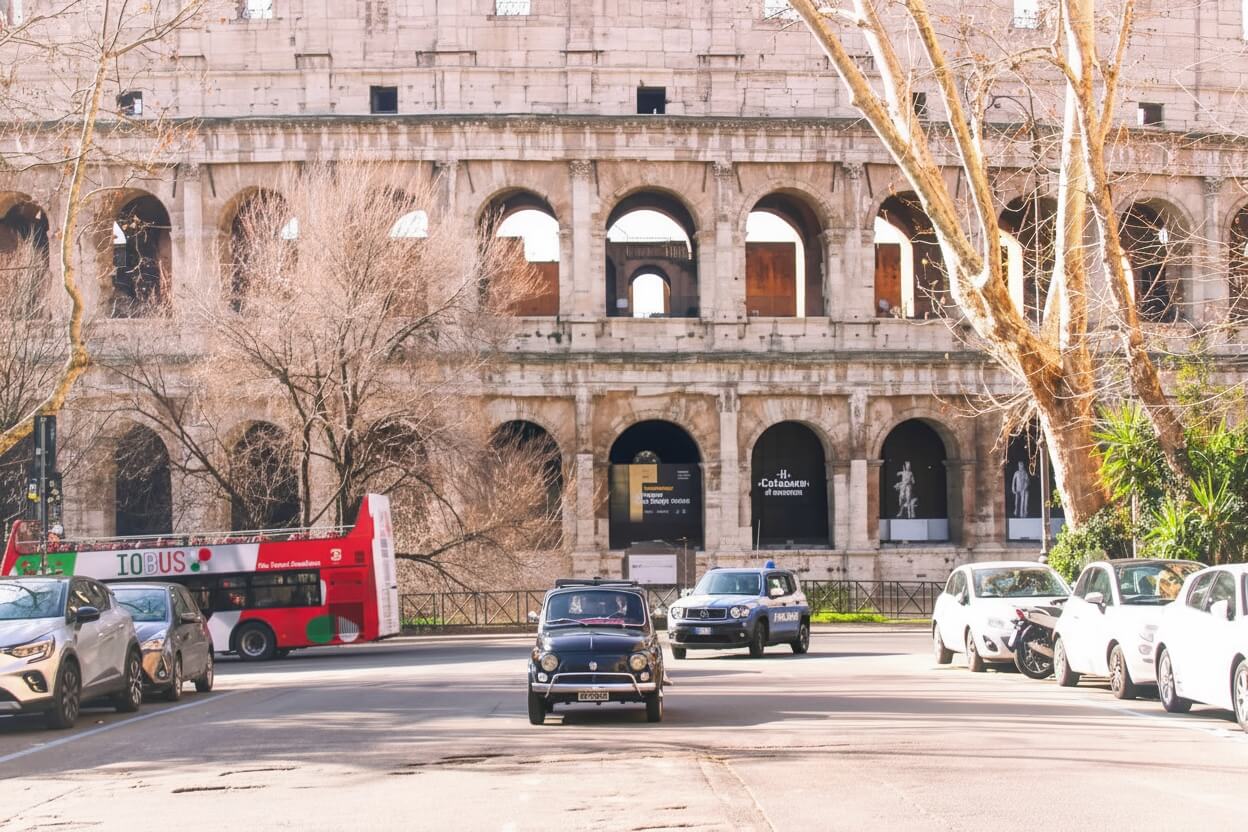
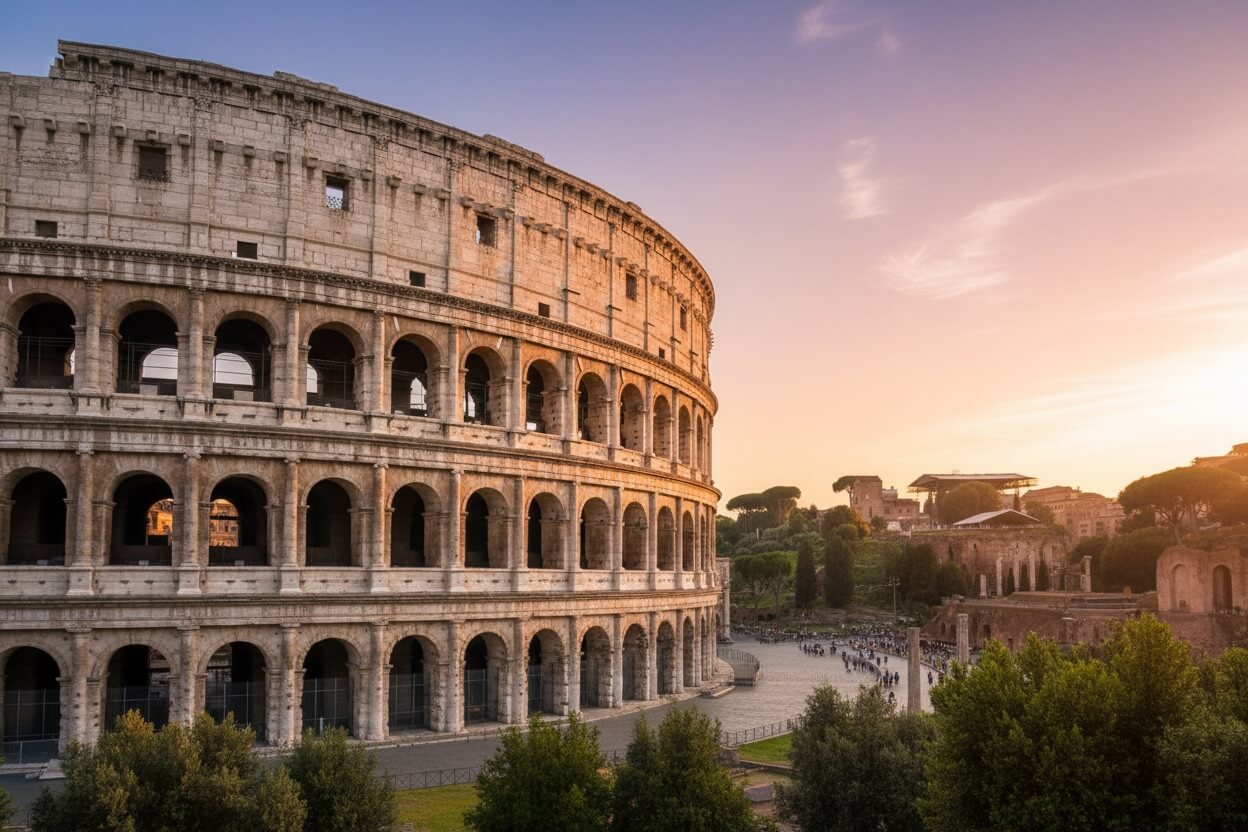
The Colosseum is a triumph of Roman engineering. The elliptical structure measures 188 metres on its long axis and 156 metres on its short axis, with an original height of 57 metres. Over 100,000 cubic metres of travertine limestone from quarries at Tivoli, more than 300 tonnes of iron clamps and millions of bricks were used in its construction. Its defining features:
Today the external facade survives only on the northern side. The southern sections collapsed in earthquakes in AD 847 and 1349, and the fallen material was carted away and reused elsewhere in Rome.
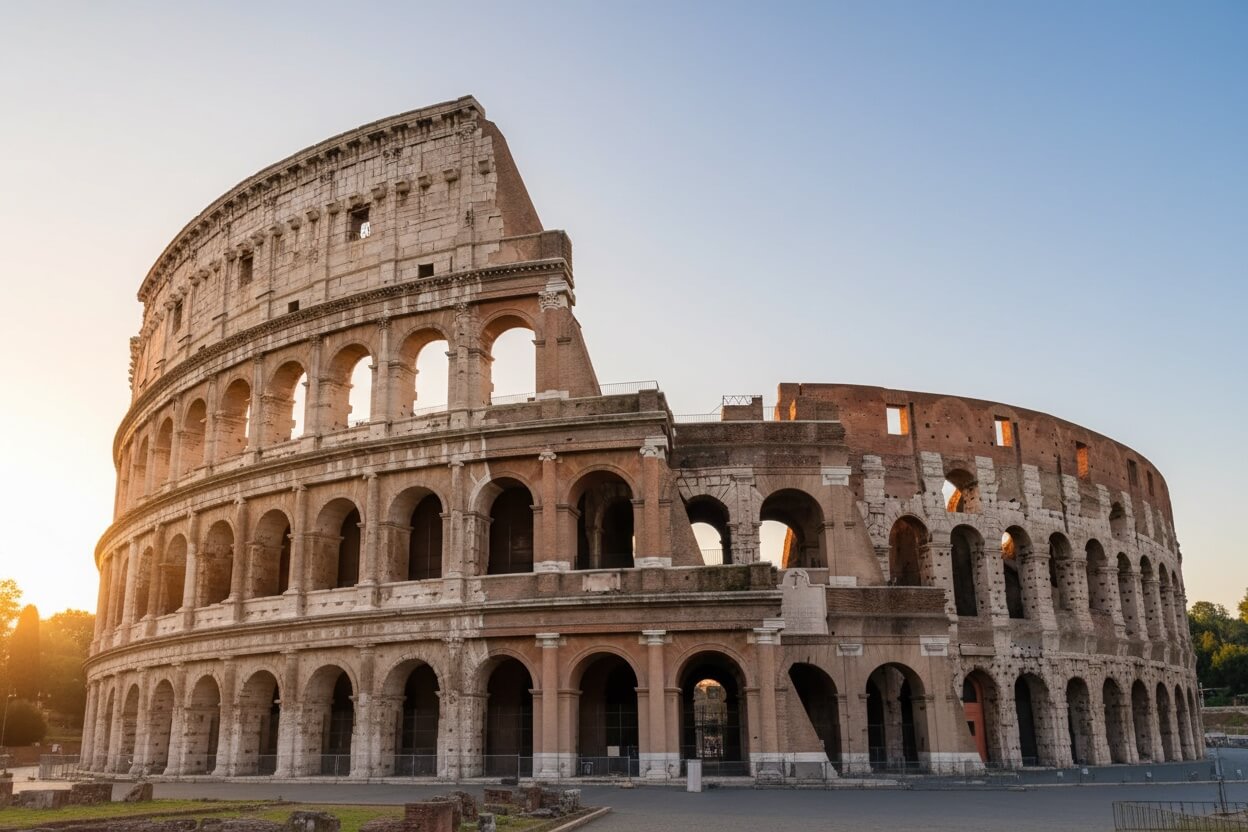
The Colosseum visit is divided into five distinct zones, each requiring a different ticket level. Decide in advance which areas matter most to you: special access zones sell out weeks ahead, particularly during peak season:
Important: since October 2023 all Colosseum tickets are personalised. Name and surname of every visitor must be provided at the time of purchase. Valid photo ID is checked at the entrance. For underground and arena tours, see our guide to best Colosseum tours with underground.
Address: Piazza del Colosseo 1, 00184 Rome, Italy — Official website: colosseo.it
Practical notes: maximum bag size is 30 × 40 × 15 cm. Larger bags and wheeled luggage are not permitted and there is no left-luggage facility at the Colosseum or Forum. Prams are allowed in the Colosseum itself, but a soft baby carrier is strongly recommended for the Forum Romanum and underground areas. Small dogs (5–10 kg in a carrier) are permitted in the open areas of the Forum and Palatine Hill but not inside the Colosseum. More on booking in advance on the tickets page.